tea.furniture · sampling channel Encyclopedia · School · Atlas · Pu-erh · Equipment EN · RU · · · FR · ES · AR
tea.furniture Cart (0)

home · catalog

Low tables for tea ceremony

A solid timber centre for gōngfu chá

The tea table is more than furniture — it is the ground on which ceremony unfolds. Our low tables are built for the deliberate rhythm of *gōngfu chá*: water grooves direct spills to drainage, solid hardwoods absorb the warmth of countless sessions, and hand-finished surfaces hold gaiwan, fairness pitcher, and cups at the exact height where breath meets leaf. Each piece comes from small workshops that understand the difference between a table and a tea table.

The quiet centre of a tea session

In a traditional tea room, the table holds everything — teapot, cups, water, and the attention of those who gather around it. A well-made tea table works in two modes: as a stage for the preparation of tea and as a silent participant that shapes the session. Its height informs posture, its drainage determines the flow of water, its grain carries the memory of use. We source tables from makers who honour this dual nature. Designs descend from the chá pán trays once used on any surface, scaled up into standalone pieces for dedicated spaces. Timber choices — black walnut, reclaimed yángmù, rosewood — are selected not only for beauty but for dimensional stability across decades of hot water and humidity. The surface is never merely flat: subtle grooves channel water to a central drain or a removable tray, keeping the brewing area tidy through countless infusions. A low table at 30–45 cm suits kneeling or sitting on cushions, keeping the ceremony at heart level. Higher options accommodate more relaxed seating without losing the intimacy of shared tea. Edge profiles are rounded to feel natural under the forearm, a detail that reveals the artisans’ understanding of movement. Every joint is pegged or mortised by hand, eliminating metal fasteners that could react with moisture over time. The result is furniture that belongs to the practice, not just to the room — a table that disappears into the ceremony while supporting every gesture, from the first rinse to the final pour.

This season’s recommendation

One table that demonstrates what we look for — generous workspace, integrated drainage, and black walnut timber that deepens in character with use. The 120cm length serves two to four people comfortably.
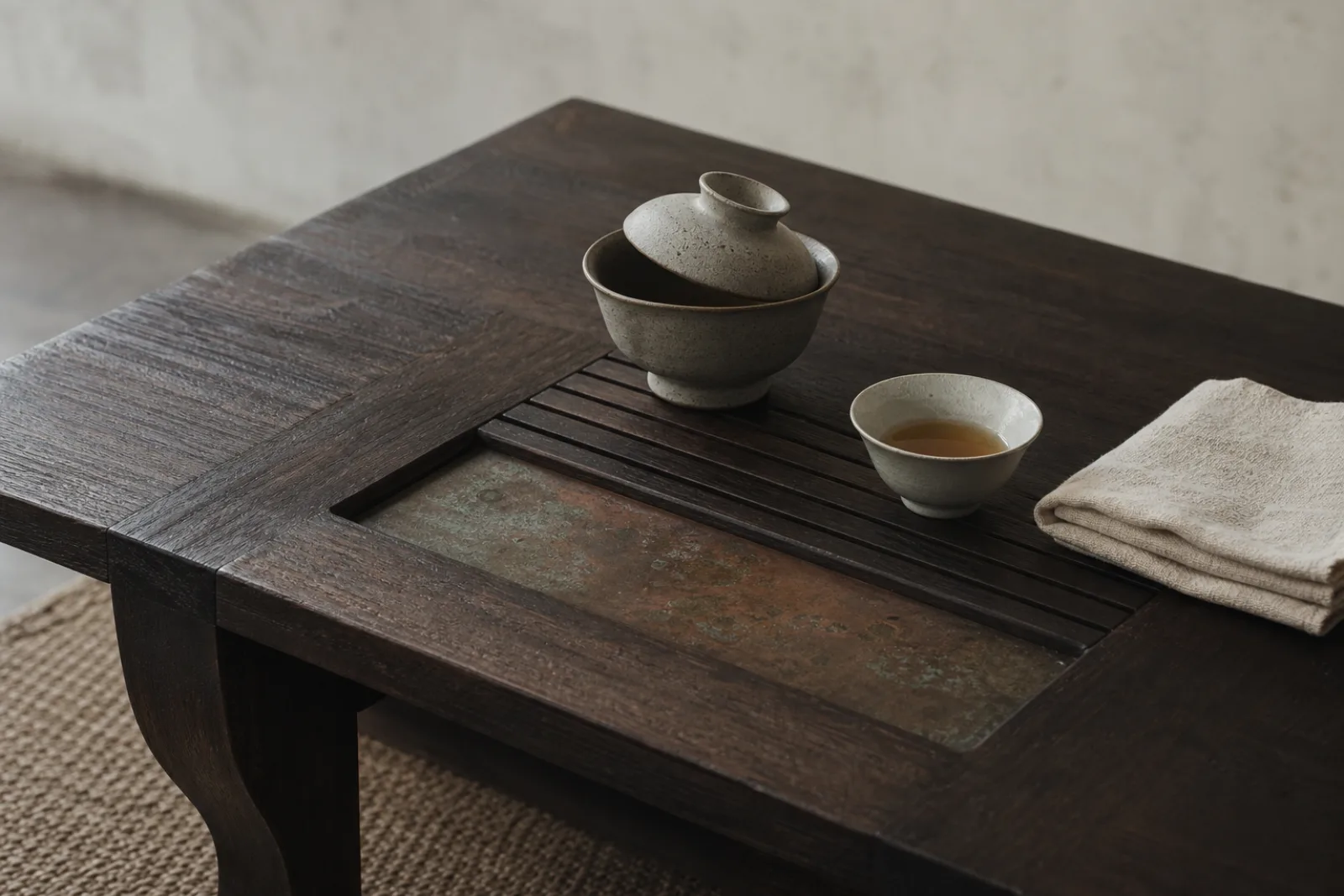
This season's offer

Inside this category

Bamboo gongfu table — 100cm

<i>Zhú gōngfū chá zhuō</i> · 竹功夫茶桌

Elm gongfu table — 140cm

<i>Yú mù gōngfū chá zhuō</i> — 140cm · 榆木功夫茶桌

Live-edge elm table

· 榆木活边茶桌

Travel gongfu table — folding bamboo

<span style='font-style:italic'>Lǚxíng Gōngfū Zhuō</span> · 旅行功夫桌

Walnut Gongfu Table — 120cm

*Hú Táo Mù Gōng Fū Chá Zhuō* (120 Límǐ) · 胡桃木工夫茶桌 120厘米

Walnut gongfu table — 90cm

*Hétáo Mù Chá Zhuō* (核桃木茶桌) · 核桃木茶桌

Бамбуковый гунфу-столик — 100 см

<i>Zhú gōngfū chá zhuō</i> · 竹功夫茶桌

Гунфу-стол из вяза — 140 см

<i>Yú mù gōngfū chá zhuō</i> — 140cm · 榆木功夫茶桌

Стол из вяза с живым краем

· 榆木活边茶桌

Складной дорожный столик для гунфу — бамбук

<span style='font-style:italic'>Lǚxíng Gōngfū Zhuō</span> · 旅行功夫桌

Ореховый стол для гунфу — 120 см

*Hú Táo Mù Gōng Fū Chá Zhuō* (120 Límǐ) · 胡桃木工夫茶桌 120厘米

Стол для гунфу-чая из ореха — 90 см

*Hétáo Mù Chá Zhuō* (核桃木茶桌) · 核桃木茶桌

竹制功夫茶桌 — 100cm

<i>Zhú gōngfū chá zhuō</i> · 竹功夫茶桌

榆木工夫茶台 — 140cm

<i>Yú mù gōngfū chá zhuō</i> — 140cm · 榆木功夫茶桌

自然边榆木茶桌

· 榆木活边茶桌

旅行功夫茶桌 — 折叠竹制

<span style='font-style:italic'>Lǚxíng Gōngfū Zhuō</span> · 旅行功夫桌

胡桃木工夫茶桌 — 120cm

*Hú Táo Mù Gōng Fū Chá Zhuō* (120 Límǐ) · 胡桃木工夫茶桌 120厘米

胡桃木功夫茶桌 — 90厘米

*Hétáo Mù Chá Zhuō* (核桃木茶桌) · 核桃木茶桌

竹製功夫茶桌 — 100cm

<i>Zhú gōngfū chá zhuō</i> · 竹功夫茶桌

榆木工夫茶台 — 140cm

<i>Yú mù gōngfū chá zhuō</i> — 140cm · 榆木功夫茶桌

自然邊榆木茶桌

· 榆木活边茶桌

旅行功夫茶桌 — 折疊竹製

<span style='font-style:italic'>Lǚxíng Gōngfū Zhuō</span> · 旅行功夫桌

胡桃木工夫茶桌 — 120cm

*Hú Táo Mù Gōng Fū Chá Zhuō* (120 Límǐ) · 胡桃木工夫茶桌 120厘米

胡桃木功夫茶桌 — 90厘米

*Hétáo Mù Chá Zhuō* (核桃木茶桌) · 核桃木茶桌

A buyer's note

Choosing your tea table

Measure for ceremony, not just the room

Allow at least 40cm of width per person to avoid crowding cups and elbows. A 120cm table welcomes up to four sitters; for solo practice, 80–100cm feels intimate without cramping the tray area.

Understand the drainage system

Tables either route water through a central channel into a hidden bucket or use a removable drip tray. Check daily capacity — a session with yixing pots and multiple rinses can produce over a litre of waste water.

Choose wood for moisture and warmth

Hardwoods like walnut, teak, and rosewood resist warping from steam and spill. Avoid soft pines. Black walnut develops a rich patina over years; lighter *yángmù* keeps the room feeling open.

Height shapes posture and pace

Tables in the 30–35cm range suit floor cushions and traditional kneeling. For chair seating or mixed groups, look at 45–50cm with a recessed centre well to keep the pouring surface low.

Look for hand-cut joinery

Pegged mortise-and-tenon or dovetail joints move with the wood through humidity changes. Mass-produced metal brackets eventually loosen and can rust inside a drainage channel.

Factor in storage for the off-session

If your table lives in a shared room, consider a design that accepts a removable cover or transforms into a side table. Some of our pieces ship with a custom fitted cover in matching timber.

Common questions

Asked, answered.

Do I need a table with built-in drainage?

Yes, if you use *gōngfu* style brewing where multiple rinses produce a steady stream of discarded water. Without integrated drainage you risk puddles that soak teaware and interrupt the session.

How do I clean the drainage channel?

Wipe the channel after each session with a damp cloth. Once a week, flush it with warm water and allow to dry completely. Avoid detergents — they can leave residue that alters the scent of tea.

Can the walnut table 120cm support heavy yixing pots?

Easily. The tabletop is 25mm solid walnut with cross-bracing beneath. It’s rated for 40kg of evenly distributed load, enough for a full ceremony setup with cast-iron kettles and several clay pots.

What height should I choose for floor-sitting?

30–35cm keeps the brewing surface at forearm level when kneeling. If you use a meditation cushion, subtract the cushion height from your comfortable knee-to-elbow distance.

Will the timber warp from constant moisture?

Our tables use quarter-sawn hardwoods and are oil-finished on all six sides, sealing the grain from humidity swings. We recommend storing away from direct heat sources, but occasional spills dry without harming the wood.

Can I order a custom size?

Yes. Each table is built to order by small workshops. Lead times and pricing vary by timber species. Contact us with your dimensions and we’ll provide a sketch within five working days.

How does shipping work?

We deliver white-glove to most countries. Each table ships in a plywood crate with a dehumidifier pack. Assembly is minimal — typically only attaching the legs or placing the drain bucket.

What’s the difference between a tea tray and a tea table?

A tea tray (*chá pán*) sits on an existing surface and catches spills in a small reservoir. A tea table is a self-standing piece of furniture with deeper drainage, more workspace, and storage. You can stack a tray on a table for an even cleaner session.